Responsible for security at an industrial site? Learn about some of the best industrial security cameras for 2025, each offering unique features to enhance site protection.
Theft, vandalism, trespass and arson are all threats faced by industrial site operators.
To help you cut through the promotional noise, here’s our rundown of the best industrial security cameras to protect manufacturing plants, factories and similar settings.
What you will learn
- Key features and benefits of the top 10 industrial security cameras for 2025
- Which camera models suit specific industrial environments and site conditions
- Pros and cons of each camera, helping you compare options with confidence
- How AI and analytics are shaping modern industrial surveillance
- Expert recommendations to support informed investment in site security
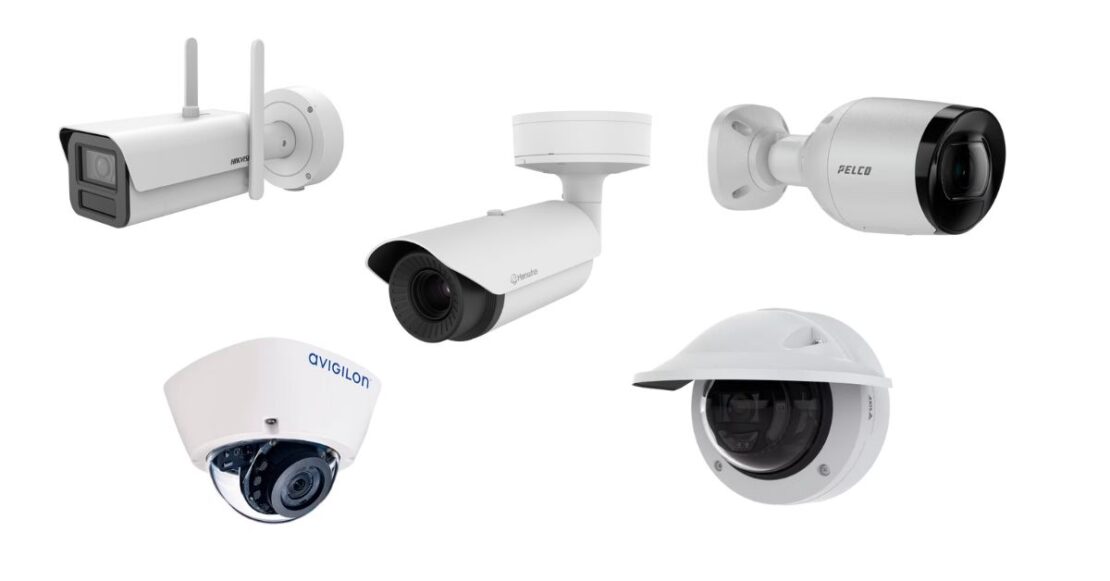
From Hikvision and Avigilon, to Axis and Bosch, these leading surveillance devices for manufacturing plants, factories and industrial settings, offer a range of options for sites large and small.
Table of contents
Now let’s take a look at the best industrial site CCTV cameras.
1. Hikvision DeepinView series
Features
Deep learning algorithms, behaviour analysis, facial recognition, and queue management.
Pros
Advanced analytics, reliable performance in various environments, making these cameras ideal for detecting threats, reducing false alarms, and improving security for industrial sites like manufacturing plants and factories.
Cons
May require significant storage and processing power; however, Hikvision offers market-leading surveillance solutions for industrial facilities, so the negatives are limited.
Best suited for specialist Hikvision CCTV camera installers, we know these devices are best for facilities aiming to enhance operational efficiency through detailed analytics. Easily integrated with CCTV monitoring systems for industrial sites.
What are the benefits of the Hikvision DeepinView Series?
The Hikvision DeepinView Series integrates advanced deep learning technology to deliver real-time facial recognition, vehicle identification, and behaviour detection.
These cameras are equipped to handle queue monitoring, perimeter violations, and object tracking, making them ideal for complex industrial environments.
With robust low-light performance and versatile form factors (bullet, turret, dome), they’re a strong choice for facilities needing both security and operational intelligence.
2. Axis P3265-LVE Dome Camera
Features
These Axis Communications security cameras capture video in 2 MP resolution at 60 FPS, including Lightfinder 2.0, Forensic WDR OptimizedIR, and a deep learning processing unit.
Pros
Delivers clear images even in tough lighting and includes smart analytics tools. Ideal for expansive sites where perimeter protection and intrusion detection are key.
Cons
Provides a 2 MP resolution, which might not work for settings and situations needing very fine details to be clear and easily analysed.
Best suited for
Industrial surveillance settings where detailed observation is of paramount importance. Perimeter security and monitored CCTV spring to mind.
Why does the Axis P3265-LVE Dome Camera work well in industrial environments?
The Axis P3265-LVE Dome Camera provides clear visuals with its 2 MP resolution and supports features like Lightfinder 2.0, Forensic WDR, and OptimizedIR.
The system has deep learning tools and built-in security, which makes it a good choice to monitor industrial spaces even when lighting is hard to manage.
3. Bosch DINION IP Thermal 8000
Features
Advanced thermal imaging, Intelligent Video Analytics (IVA), long detection range up to 5,850 metres.
Pros
Effective in complete darkness and offers robust analytics for early detection. Highly suited to high risk sites storing valuable equipment and rich picking for thieves.
Cons
Higher cost; and as a result, may not be affordable where security budgets are squeezed, where other lower cost alternatives
Best suited for
Perimeter surveillance and security monitoring in low-light or no-light conditions. Reduced false positives and accurate threat identification and confirmation.
What makes the Bosch DINION IP Thermal 8000 good for perimeter security?
The Bosch DINION IP Thermal 8000 offers advanced thermal imaging that detects with precision at distances of up to 5850 meters.
These security cameras are perfect for industrial settings as they include built-in Intelligent Video Analytics to detect intrusions, which helps protect large spaces.
4. Avigilon H5A Camera Line
Features
High-resolution imaging, adaptive IR, Avigilon Appearance Search™ technology, and Unusual Motion Detection (UMD).
Pros
These Avigilon security cameras offer a range of benefits Smart AI-driven alerts, excellent detail retention, integrates easily with Access Control Manager. Perfect for integrated security solutions.
Cons
Premium pricing; may need high-capacity storage depending on setup. A good choice for firms with sizeable security budgets.
Best suited for
Large-scale facilities such as manufacturing plants and sprawling factory operations requiring proactive threat detection and real-time incident response.
The use cases for Avigilon H5A cameras in industrial settings
Avigilon’s H5A cameras are ideal for expansive manufacturing plants, distribution centres, and utilities infrastructure. Their AI analytics help security teams detect unusual behaviour instantly.
Appearance Search makes investigations faster across large areas. These systems are especially useful where time-critical threat response is essential.
5. Ubiquiti AI PTZ Industrial
Features
For starters, the Ubiquiti AI PTZ Industrial cameras offer 4K resolution, 22x optical zoom, infrared night vision, and edge AI features including face and license plate recognition.
Pros
High-resolution imaging, versatile PTZ capabilities, and AI-driven analytics. Perfect for long-range surveillance and perimeter CCTV.
Cons
Requires integration with UniFi Protect system; may have a learning curve for new users. It could be a factor where other, more commonly deployed brands offer more out-of-the-box options.
Best suited for
Large industrial sites requiring detailed remote CCTV remote monitoring for industrial sites and facilities capabilities, and AI-driven analytics, where accurate detection is vital.
What are the advantages of the Ubiquiti AI PTZ Industrial Camera?
The Ubiquiti AI PTZ Industrial Camera features 4K resolution, 22x optical zoom, and AI-driven analytics, including face and license plate recognition. With AI-powered surveillance systems shaping the future of industrial site protection, these cameras are well worth a second look.
Its robust design and long-range infrared night vision make it suitable for large industrial sites requiring detailed monitoring.
6. Hanwha Vision Radiometric thermal cameras
Features
Detects temperatures from -40°C to 550°C, uses AI for analysis, and has dual-spectrum imaging.
Pros
Hanwha’s Radiometric thermal cameras monitor temperatures with precision and detect overheating in equipment. Perfectly suited as a means to detect fire risks in their infancy.
Cons
Needs specialised training to deploy across your sites. Compared to more affordable CCTV brands, they could well be cost-prohibitive for smaller industrial operations.
Best suited to
Sites where critical temperature monitoring is a key security requirement in places like manufacturing plants.
When are Hanwha Vision Radiometric thermal cameras most useful?
These cameras work best in places where monitoring temperature is a priority, like manufacturing facilities.
They cover a broad temperature range from -40°C to 550°C and rely on AI for maintenance and safety tasks.
7. Dahua WizMind series
Features
Facial recognition, people counting, AI-driven analytics, and behavioural or situational analysis are key features of Dahua’s WizMind series. Perfect for large scale facilities and sites
Pros
AI features provide advanced tools for monitoring. These cameras help with complex surveillance setups where avoiding and reducing false alarms keeps the system reliable.
Cons
Privacy might be a concern. Cameras need a proper setup to prevent mistakes and limit unnecessary overlaps.
Best suited for
Places like big industrial facilities with high traffic. They help analyse detailed situations to separate harmless activities from real threats.
How do Dahua WizMind Series cameras contribute to operational efficiency?
These cameras include AI-based features such as face recognition, behaviour tracking, people counting, and situational analysis to help improve efficiency.
These surveillance solutions feature AI-based capabilities, including face recognition, behaviour tracking, people counting, and situational analysis, to improve site protection.
These features enable industrial facilities to monitor operations, control staff movement, and enhance safety protocols with greater efficiency.
8. i-PRO Sensing Solutions
Features
These security camera options from i-Pro include AI video analytics, supporting edge computing, and allowing supervision of multiple cameras across large sites.
Pros
Their advanced data processing capabilities lower strain on the network and offer solutions that can grow with demand.
Cons
Setting it up can be tricky, and it might not work well with non-i-PRO systems, unlike how Hikvision and Paxton integrate well across multiple systems.
Best suited to
Industrial security teams or offices aiming to expand surveillance with efficient and scalable security camera options.
Why are i-PRO Sensing Solutions devices a good fit for industrial security needs?
These security CCTV cameras use AI with edge computing, letting them analyse data in real-time without putting pressure on the network.
Their ability to monitor several cameras helps cover big areas, minimising blind spots and improving reaction speeds.
These systems are built to scale and offer high performance in tough environments. This makes them a good choice to use in warehouses, factories, and logistics operations.
9. Pelco Sarix Enhanced Series
Features
High-resolution imaging, low-light performance, SureVision technology, and advanced analytics.
Pros
Robust devices suited to harsh outdoor conditions. Furthermore, reliable performance in adverse weather conditions, and poor and no-lighting environments.
Cons
The higher price points may require specialised installation. A key consideration for site operators and firms with tighter security budgets,
Best suited to
Critical infrastructure and environments with challenging conditions, such as howling wind, rain, fog and low light settings.
Why choose Pelco Sarix for your industrial security camera needs?
Pelco’s Sarix Enhanced cameras are built for tough environments. With strong low-light imaging, video stabilisation, and high frame rates, they deliver sharp footage even in harsh industrial settings.
Their built-in analytics support real-time motion alerts and object detection, making them a smart pick for secure, round-the-clock monitoring.
10. Genie Eco-IP 4K bullet camera
Features
4K Ultra HD resolution, True WDR, built-in IR LEDs (up to 50m), and H.265 compression. Crystal clear footage for use in evidence gathering and accurate detection.
Pros
Affordable, weatherproof, and simple to install with PoE. Solid IP cameras that protect sites against a range of threats like intrusion, theft, and vandalism.
Cons
Limited smart analytics compared to higher-end models. Not ideal for industrial sites typically requiring accurate detection and situational analysis.
Best suited for
Small to mid-sized industrial sites needing cost-effective, high-resolution surveillance.
Why Genie Cameras are a good fit for industrial facilities
Genie’s 4K bullet cameras offer a practical solution for industrial premises focused on perimeter and outdoor coverage.
With weather-resistant casings and strong night vision, Genie’s 4K bullet cameras perform well across loading bays, fencing lines, and storage yards.
Their simplicity and affordability make them ideal for upgrading basic security systems. A strong fit for operations balancing cost and performance.
Factors to consider when choosing the best industrial security cameras
Environment: Choose cameras built to survive your harsh weather or low-light conditions
Coverage: Assess blind spots, perimeter length, and internal areas needing monitoring
Features: Consider AI capabilities like motion detection, object tracking, and alerts
Integration: Ensure compatibility with existing systems, like alarms or access control
Budget vs Performance: Balance cost against essential features to avoid overspending
Frequently asked questions
What features should I prioritise when choosing a camera for an industrial site?
Prioritise cameras that offer clear image resolution, reliable night vision, and weatherproof housing. Built-in analytics can support better monitoring. Integration with access control or alarm systems ensures the camera works as part of a layered defence strategy.
Are thermal cameras really worth the cost for factory surveillance?
Thermal imaging cameras help detect threats invisible to standard lenses, especially in darkness or smoke. They are especially useful along long perimeters, around storage areas, or in low-visibility conditions. The higher cost suits larger, higher-risk sites.
How important is AI in today’s industrial security cameras?
AI helps reduce false alarms by distinguishing real threats from harmless motion. Features like behaviour tracking, facial recognition, and license plate detection allow teams to respond faster. This is particularly valuable where speed and accuracy matter most.
4. What’s the difference between bullet and dome cameras in factory security setups?
Bullet cameras work best for long-range outdoor use. They’re visible and act as a deterrent. Dome cameras are more discreet and tamper-resistant, often used indoors or in high-traffic zones. The choice depends on coverage and location type.
5. Can older CCTV systems be upgraded without replacing every component?
Yes, many modern cameras can connect to existing infrastructure. Look for hybrid systems or IP cameras with PoE to simplify installation. This lets sites upgrade performance and add smart features without ripping out the entire legacy setup.
Related reading